Korean meals are naturally friendly to groups because the table can include many textures and flavors at once. One person may want something spicy, another may prefer grilled meat, and someone else may want rice and mild sides. Instead of forcing everyone into one style of dish, the table can hold several choices together.
The easiest way to order family-style is to choose a center dish, a comfort dish, and a balancing dish. A grill plate can be the center. A stew can bring warmth. Rice and banchan give everyone something familiar to return to. If the group is larger, add a rice bowl, seafood dish, or braised item.
Make room for different spice levels
Not everyone enjoys the same heat. Keep spicy dishes shared rather than making them the only option. A milder grilled item, rice, or vegetables can help the table feel welcoming to more people.
A good table has rhythm
Share slowly. Take a bite of meat, a spoonful of stew, a little rice, then something crisp or pickled. That rhythm is what makes Korean dining feel generous and comfortable.
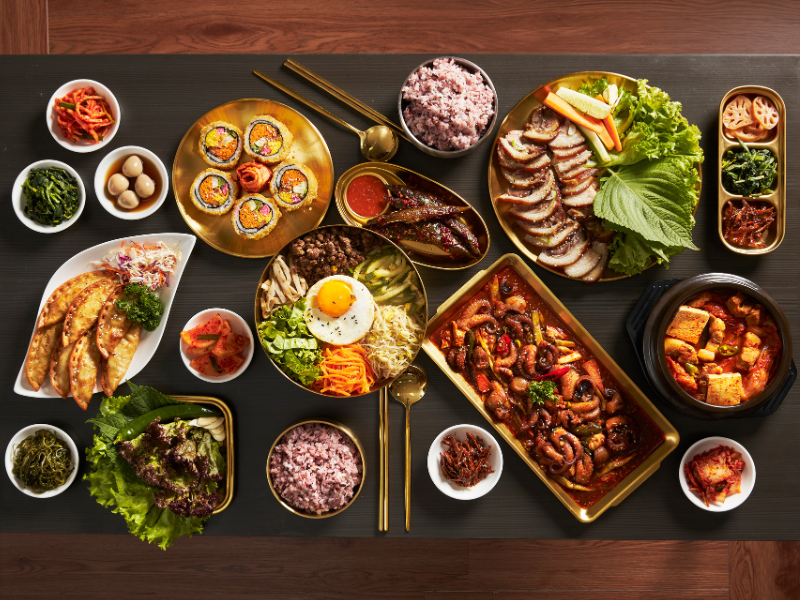
Family-style table guide
| Table part | Purpose | Good choice |
|---|---|---|
| Center dish | Gives the meal a main focus. | Galbi, grill plate, or braised dish. |
| Comfort dish | Adds warmth and broth. | Kimchi jjigae or another stew. |
| Balancing dishes | Bring freshness and flexibility. | Rice, banchan, vegetables, mild sides. |
How to order for different appetites
Family-style dining is not about ordering the biggest possible spread. It is about giving the table enough contrast. One person may want heat, another may want something mild, and someone else may want a simple rice bowl. Korean food makes room for all of that because the side dishes and shared plates create flexibility.
- Count the appetites, not just the people. Two hungry guests may need more than three light eaters.
- Choose one spicy dish. Let spice be an option instead of the whole meal.
- Add rice for everyone. Rice helps stretch sauces, broth, and grilled flavors.
- Ask about allergies before sharing. Shared dishes can make ingredient questions more important.
A shared Korean meal also creates conversation. People pass dishes, compare bites, and discover combinations. Galbi with rice tastes different from galbi with kimchi. A spoonful of stew after a grilled bite changes the pace. Banchan keeps the table lively without requiring another full entree.
For families or groups visiting 777 Korean Restaurant, the best order is usually balanced rather than complicated. Pick a warm dish, a savory dish, and enough sides to make the meal feel generous. That structure keeps the table friendly for first-time diners and regular guests alike.
More practical notes for families and groups
Family-style dining works best when the order makes room for different comfort levels. A table with parents, children, friends, or coworkers may include people who enjoy spice and people who avoid it. It may include adventurous eaters and cautious eaters. Korean food can handle that mix because the table can include several types of dishes without feeling disconnected.
A useful strategy is to choose one safe dish, one shared comfort dish, and one dish with stronger personality. The safe dish might be rice or a mild grilled item. The comfort dish might be stew. The stronger dish might be spicy squid, kimchi jjigae, or a bold braised item. This approach lets everyone participate.
- For kids or mild eaters: keep rice and non-spicy options available.
- For adventurous guests: add one bolder dish without making the whole table intense.
- For larger groups: order in categories instead of repeating the same type of dish.
- For allergies: ask clearly before everyone starts sharing from the same plates.
The beauty of family-style Korean dining is that no single bite has to define the meal. Someone can enjoy galbi with rice while another person focuses on stew. Someone else may discover a favorite banchan. The meal becomes a set of small choices, which makes it easier for different people to enjoy the same table.
At 777 Korean Restaurant, group dining can be casual and flexible. If you are unsure how much to order, ask for guidance based on the number of people and hunger level. A thoughtful order usually feels better than an oversized one with too much repetition.
Final checklist for a shared table
Before ordering family-style, look around the table and think about comfort. Does everyone eat spicy food? Does anyone avoid seafood, pork, egg, wheat, soy, sesame, or nuts? Is the group very hungry, or is this a lighter meal? These questions make the order more useful than simply choosing the most popular dishes.
A good shared Korean table usually has one dish that feels hearty, one dish that feels warm, and one part of the meal that feels fresh. Galbi can be hearty. Stew can be warm. Banchan, rice, and vegetables keep everything balanced. This structure helps different guests build their own plates without needing separate meals for everyone.
The best shared meals are not rushed. Let people try combinations and return to the dishes they enjoy. Korean dining rewards curiosity, and a family-style table gives every guest room to discover a favorite bite.
For families, the most successful order is usually the one that gives everyone at least one comfortable bite and one interesting bite. That balance keeps the table generous, calm, and enjoyable.
It also helps to let the meal unfold slowly. Children, first-time guests, and cautious eaters may need a few bites before they know what they like. A shared Korean table gives them that room. Instead of forcing one large plate on each person, it lets the group discover flavors together and return to the dishes that feel best.
Making the table easier for everyone
Family-style dining works best when the table has a few dependable anchors. Rice, a mild dish, and a familiar grilled or braised item help less adventurous guests feel comfortable. Spicier or more fermented items can then be explored in smaller amounts.
This approach is especially helpful for children, older guests, or anyone trying Korean food for the first time. A generous table is not only about quantity. It is about giving each person a way to enjoy the meal.
Reader note
This guide is original informational content written to help guests make practical Korean dining decisions. It is not a guarantee of current menu availability, pricing, portion size, spice level, or preparation on a specific day.
If allergies, dietary needs, alcohol choices, takeout timing, or group orders matter, confirm details directly with the restaurant before ordering. Advertising, if shown on this page, is separate from the article and does not change the guidance.