Kimchi jjigae is the kind of dish that explains itself the moment it reaches the table. It is hot, aromatic, deeply savory, and bright from aged kimchi. The broth usually carries a gentle tang from fermentation, richness from pork or another protein, and softness from tofu. When eaten with plain rice, the stew becomes balanced instead of overwhelming.
What makes kimchi jjigae special is not only spice. Good kimchi stew has layers. The first taste may be sharp and warm, but the second taste brings depth, saltiness, and a mellow comfort that comes from simmering. A spoonful of broth, a piece of tofu, and a bite of rice can feel complete without needing anything complicated.
How to enjoy it at the table
If you are new to Korean stews, let the bowl cool for a moment before taking a full spoonful. Try the broth first, then add rice to the spoon for a softer bite. Banchan helps reset the palate between spoonfuls, especially if the stew is spicy or rich. Kimchi jjigae also pairs well with grilled meat, stir-fried squid, or a simple rice bowl when the table is sharing.
A helpful ordering note
Kimchi is fermented, so the flavor can be bold. If you have allergies, avoid pork, or prefer a milder spice level, ask the restaurant team before ordering. Korean restaurants often have several comforting options, and a quick question can help you choose a dish that fits your appetite.
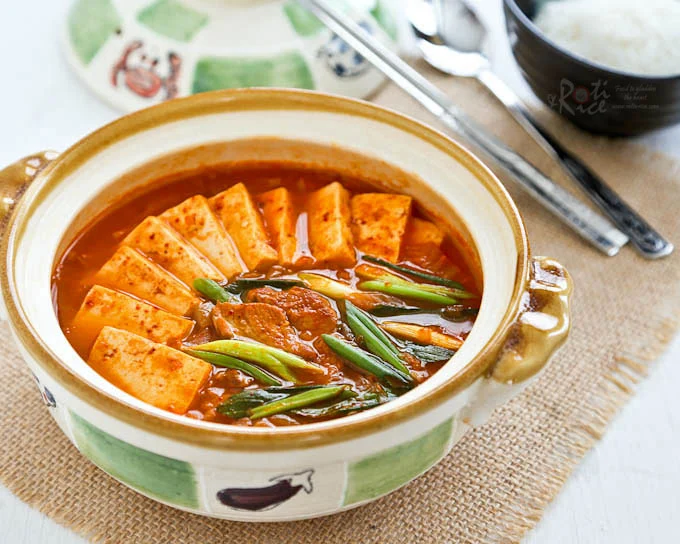
Quick kimchi jjigae table guide
| Element | What it adds | Helpful tip |
|---|---|---|
| Aged kimchi | Tang, depth, gentle funk, and natural acidity. | Eat it with rice if the flavor feels strong at first. |
| Tofu | Softness that calms the broth and adds texture. | Let it cool for a moment before taking a full bite. |
| Pork or protein | Savory richness that makes the stew feel filling. | Ask about ingredients if you avoid pork or have dietary needs. |
How to build a satisfying order
Kimchi jjigae can be a full meal by itself, but it becomes even better when the table has contrast. A bowl of rice is the most important partner because it turns the broth into something softer and more rounded. Banchan adds crunch and brightness. If you are sharing with another person, a grilled or stir-fried dish can give the table a second texture so every bite does not feel the same.
- Start with the broth. Taste a small spoonful first so you understand the spice, sourness, and salt level before mixing it with rice.
- Add rice gradually. Some people like rice on the spoon; others like a spoonful of stew followed by rice. Either way works.
- Use banchan as contrast. A crisp or lightly seasoned side dish makes the stew feel brighter and keeps the meal from becoming too heavy.
- Ask before customizing. If you need less spice, no pork, or allergy information, ask the staff before ordering. Broths and seasonings can contain ingredients that are not visible.
For first-time guests, the best mindset is curiosity rather than perfection. Korean comfort food is meant to be eaten in a natural rhythm. Take a spoonful, pause, add rice, try a side dish, and return to the bowl. That rhythm is why kimchi jjigae feels so steady and comforting. It is not fancy in the formal sense, but it carries the warmth of a meal that has been cooked to satisfy real hunger.
If you are visiting 777 Korean Restaurant with friends, kimchi jjigae can be the warm center of the table. Pair it with galbi for a richer meal, bibimbap for a vegetable-and-rice balance, or seafood if the group wants brighter flavors. The stew is flexible enough for lunch, dinner, or a late meal after a long day in Las Vegas.
More practical notes before you order
Kimchi jjigae is often described as a simple stew, but simple does not mean plain. The dish depends on the quality and age of the kimchi, how long the broth has been simmered, and how the rich ingredients are balanced. Older kimchi usually gives the stew a deeper sourness and stronger aroma. Fresh kimchi can taste brighter but may not create the same depth. That is why two bowls of kimchi jjigae can feel different even when the ingredient list looks similar.
If you are ordering it as your main dish, think about what kind of meal you want. For a quiet lunch, stew and rice may be enough. For a shared dinner, it can sit beside grilled meat, bibimbap, or seafood. If someone at the table is sensitive to spice, kimchi jjigae can still work as a shared item as long as there are milder choices nearby. The goal is not to make every dish intense. A balanced table is more enjoyable than a table where every bite has the same heat level.
- For a lighter meal: order kimchi jjigae with rice and enjoy banchan between spoonfuls.
- For a shared meal: pair the stew with one grilled item and one mild or vegetable-forward dish.
- For a first visit: ask how spicy the stew is that day and whether pork or seafood is part of the preparation.
- For takeout: keep in mind that hot stews travel differently than dry dishes and may need careful handling.
Kimchi jjigae also shows why Korean food is built around balance. The stew is strong, but rice is calm. The broth is hot, but tofu is soft. Kimchi is tangy, but pork or another protein can be rich. Banchan changes the pace. When all of those pieces are present, the dish feels complete rather than aggressive. That balance is what makes it a comfort food instead of just a spicy food.
Guests who want to understand Korean cuisine can learn a lot from this one bowl. It teaches fermentation, broth, spice, texture, and the importance of side dishes. It also rewards patience. The first spoonful may be about heat and tang, but the later spoonfuls become warmer, rounder, and more familiar. That slow change is part of the pleasure.
Understanding the stew as a meal
Kimchi jjigae is often described as one bowl, but it behaves like a full meal when rice and sides are present. The broth gives heat and acidity, tofu gives softness, protein gives depth, and rice gives balance. Each piece matters.
If the stew tastes strong at first, do not judge it from one spoonful. Try it with rice, then try a bite of banchan, then return to the broth. The flavor becomes more rounded when the table is used as a whole.
Reader note
This guide is original informational content written to help guests make practical Korean dining decisions. It is not a guarantee of current menu availability, pricing, portion size, spice level, or preparation on a specific day.
If allergies, dietary needs, alcohol choices, takeout timing, or group orders matter, confirm details directly with the restaurant before ordering. Advertising, if shown on this page, is separate from the article and does not change the guidance.