People often describe Korean food by flavor—spicy, savory, fermented, sweet—but texture does just as much work. Think of the crisp edge of a scallion pancake, rice cakes that push back gently as you chew, or soft tofu moving through a hot broth. Put contrasting textures on one table and even a simple order stays interesting from the first bite to the last.
This is especially useful if unfamiliar dish names make choosing difficult. You may not know exactly how a sauce tastes, but you probably know whether tonight calls for crunch, tenderness, or a warm bowl with something soft. Texture gives you another honest way to explain what you enjoy.
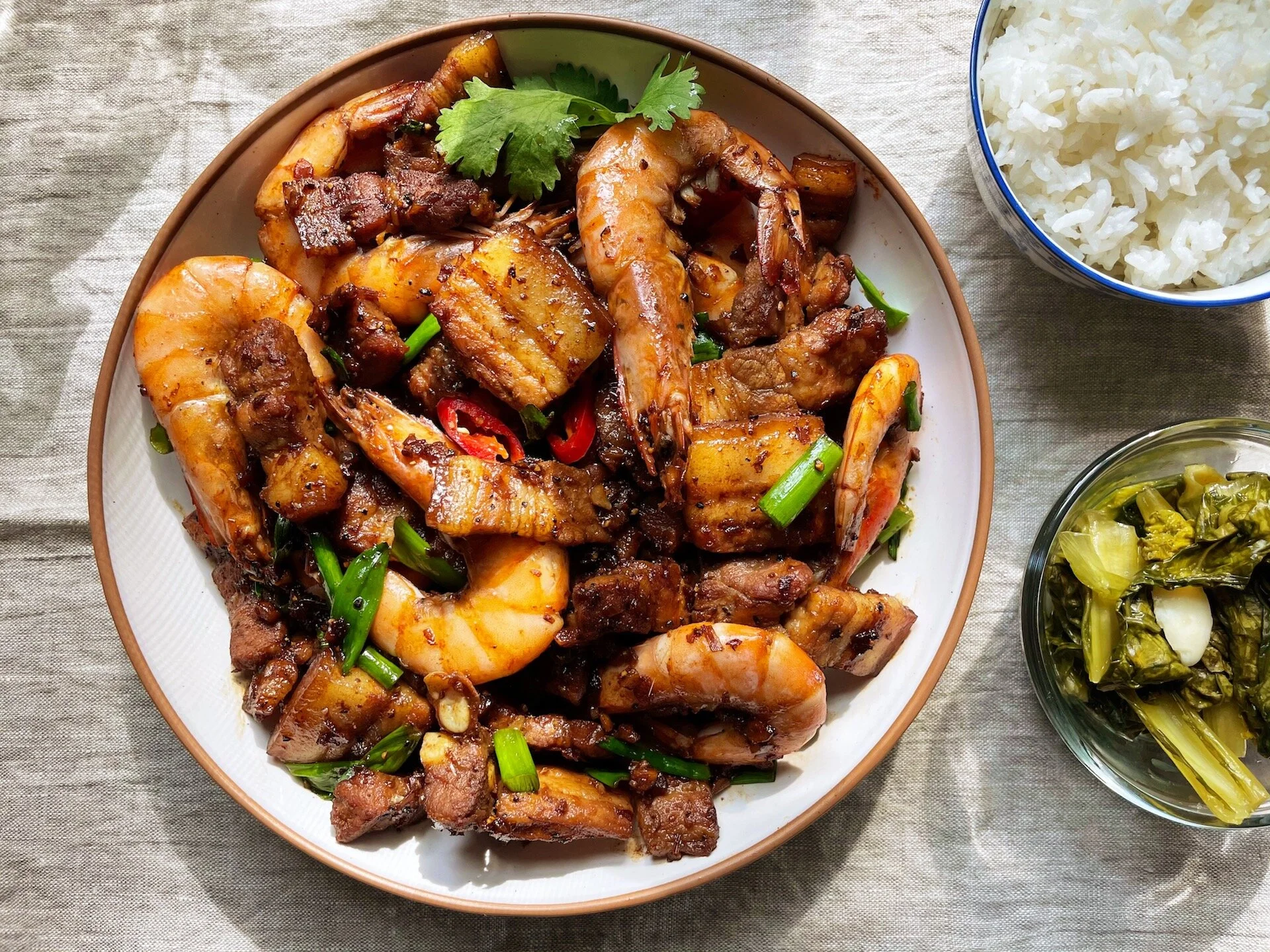
For crisp edges: jeon and well-browned grill dishes
Jeon, the broad family of pan-fried pancakes and fritters, is about contrast: a lightly crisp surface around a tender center. It is best soon after it reaches the table. Letting it sit under steam softens those edges, which is why jeon makes a good opening dish to share while everyone decides what to eat next.
Grilled meats offer a different kind of crispness. Fat meeting a hot surface can create caramelized edges while the inside stays juicy. Not every piece will be equally browned, and leaner cuts behave differently from pork belly or marinated beef. If crispness is your priority, ask what grilled dish develops the most browning and whether it is cooked in the kitchen or at the table.
For chew: rice cakes, noodles, and squid
Korean rice cakes, or tteok, have a springy, dense chew that surprises diners expecting something like a soft Western cake. In tteokbokki, that chew stands up to a glossy sauce. It is comforting for people who enjoy texture, but it can feel substantial; pairing it with something fresh or brothy keeps the meal from becoming heavy.
Noodles can range from soft and slippery to notably elastic, depending on what they are made from and how they are served. Squid has its own clean, bouncy bite when cooked carefully. If chewy food is not comfortable for you, say so. “Which noodle is softer?” is a completely reasonable menu question.
For softness: tofu, egg, and rice
Soft tofu is less about blandness than contrast. In a forceful broth, its delicate texture creates a quiet moment between spicy or deeply savory spoonfuls. Egg can do something similar when it is steamed, folded into a dish, or cooked in residual heat. Plain rice is the steady base: soft enough to absorb sauce, but structured enough to reset the palate.
This trio is helpful for mixed tables. A diner who wants intensity can take more sauce or broth, while someone who prefers a gentler bite can lean on rice and tofu. Keep in mind that “soft” does not mean allergen-free or mild; broths and seasonings may contain seafood, soy, wheat, sesame, egg, or chile.
For tenderness: braises, stews, and marinated meat
Time changes texture. Braised dishes—often identified by the word jjim—use moisture and slower cooking to soften firm ingredients and carry flavor inward. Stewed kimchi loses its raw crunch and becomes silky around the edges. Marinated meat can cook up tender, although the final result also depends on the cut and cooking time.
Tender dishes feel especially satisfying when paired with one crisp or raw element. A bite of pickle, a cool vegetable side, or fresh lettuce adds definition and keeps richness from blurring together.
Banchan are the texture controls
Small side dishes are not merely decoration. One may be snappy and sour, another soft and savory, another cool and lightly dressed. You can change a bite of grilled meat without ordering another main: add a crisp vegetable, a little rice, or a softer side. Because banchan vary with the kitchen and the day, it is better to notice what is actually in front of you than expect a fixed lineup.
| If you want… | Look toward… | Add for contrast |
|---|---|---|
| Crisp | Jeon or browned grilled food | A soft stew or rice |
| Chewy | Rice cakes or elastic noodles | Fresh vegetables or broth |
| Silky | Soft tofu or steamed egg | A crisp, tangy banchan |
| Tender | Braised or marinated dishes | Lettuce, pickle, or fresh garnish |
Build contrast, not a checklist
You do not need one item from every row. For two people, one soft or brothy anchor and one dish with firmer edges may be plenty. For a group, add a chewy or fresh element if appetites allow. The useful question is not “Did we cover everything?” but “Will these dishes still feel interesting together after ten minutes?”
Texture also changes in transit. Fried and grilled foods lose crispness in a closed takeout container; noodles continue absorbing liquid; rice firms as it cools. If the meal will travel, choose a dish whose appeal does not depend entirely on a just-cooked crust, or plan to eat it soon.
Related guides
Preparation and texture vary by recipe and service. Confirm current menu options and ask the restaurant directly about allergens or dietary needs.