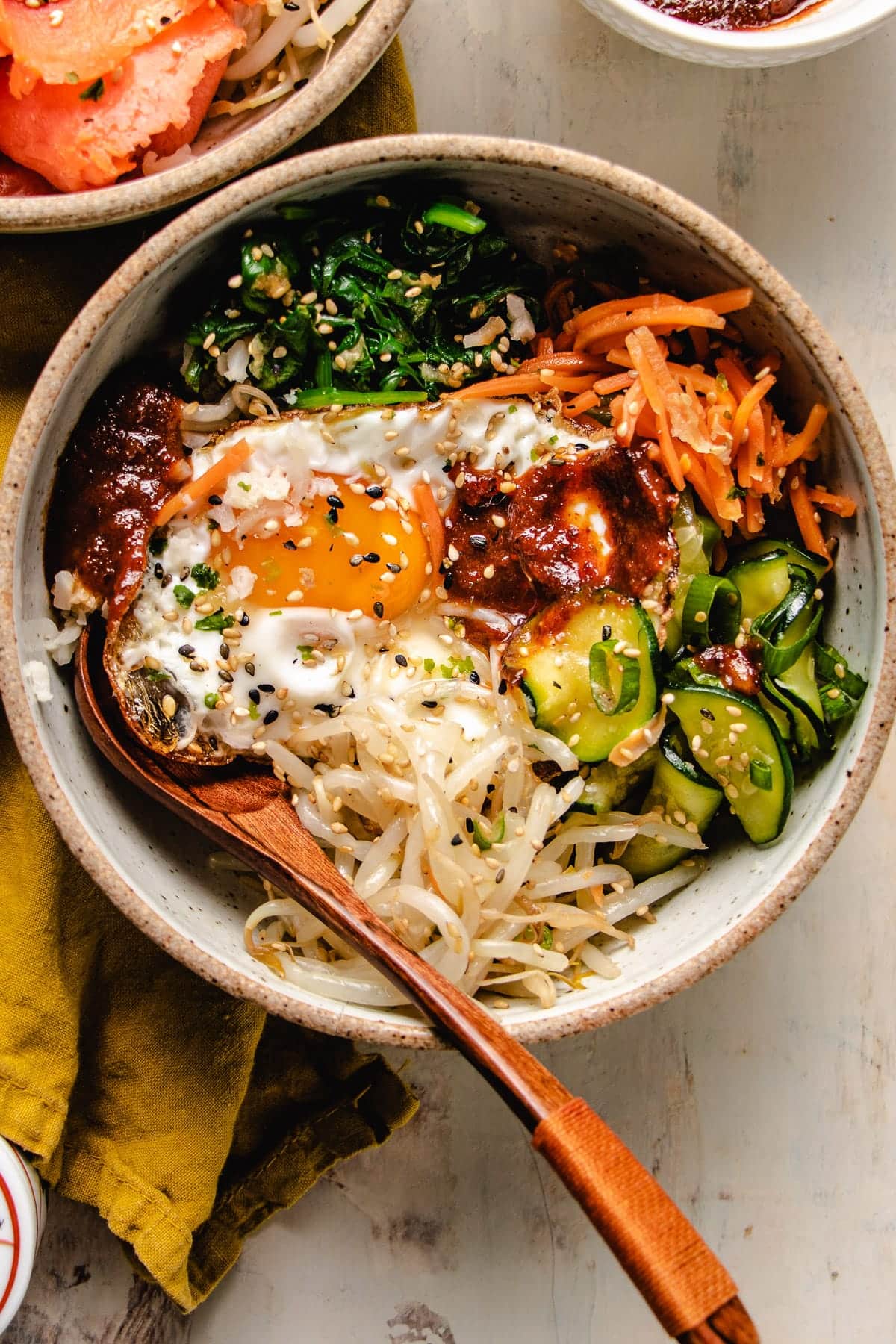
Bibimbap is one of the easiest Korean dishes to understand because the idea is visible in the bowl. Rice sits underneath vegetables, protein, sauce, and often an egg. When mixed, the ingredients become one complete meal with softness, crunch, sweetness, heat, and savoriness in each spoonful.
Bulgogi brings a gentle sweetness and savory depth. The beef is usually marinated so it tastes seasoned all the way through, not just on the surface. Vegetables add freshness and texture. Rice gives the bowl structure. Sauce brings everything together, but it is best added gradually if you are unsure about spice.
Mixing is part of the dish
Some guests hesitate to mix a beautiful bowl, but bibimbap is designed for it. Stirring spreads the sauce, warms the vegetables, and lets the rice catch all the flavor. You can mix fully or leave a few sections separate if you like contrast between bites.
When to order it
Bulgogi bibimbap is a helpful choice for lunch, first-time visitors, or anyone who wants a complete meal without ordering several dishes. It also works well beside soup or banchan if the table wants to share. Ask about egg, wheat, soy, sesame, and spice if you have dietary needs.
Bibimbap component table
| Component | Purpose | Ordering note |
|---|---|---|
| Rice | Creates the base and absorbs sauce. | Mix well if you want even flavor. |
| Bulgogi | Adds sweet-savory marinated beef. | Ask about soy or wheat if needed. |
| Vegetables and sauce | Bring freshness, heat, crunch, and color. | Add sauce slowly if you prefer less spice. |
How to approach the bowl
Bibimbap is helpful for people who want a satisfying Korean meal without making several decisions. It has a clear structure, but it still feels lively because every spoonful can be slightly different. The vegetables keep the bowl from feeling too rich. The bulgogi gives it depth. The sauce wakes up the rice. The egg, when included, makes the texture rounder and softer.
- Look before mixing. Notice the vegetables, protein, and sauce so you know what is in the bowl.
- Mix from the bottom. Rice carries the flavor, so bring it up through the toppings instead of only stirring the surface.
- Control the sauce. If sauce is served separately, add a little first. You can always add more.
- Use banchan between bites. Side dishes keep the bowl feeling fresh and give the meal more variety.
For lunch, bulgogi bibimbap is especially practical because it feels complete in one order. For dinner, it can sit beside a stew or grill dish and become part of a shared table. The bowl is also a good starting point for guests who are new to Korean food because it introduces common flavors in a familiar format.
The best way to enjoy it is not to chase a perfect bite. Mix enough to bring the dish together, then let the textures do their work. A little chew from beef, softness from rice, crispness from vegetables, and warmth from sauce make the bowl satisfying from start to finish.
More practical notes before you order
Bulgogi bibimbap is a useful dish because it gives both comfort and variety in one bowl. It is not as brothy as stew and not as slow as a grill table, but it still carries many Korean dining ideas. You get rice as a base, marinated beef for savory sweetness, vegetables for freshness, sauce for heat and depth, and often egg for richness. When those pieces are mixed together, the bowl becomes more than a simple lunch item.
The most common mistake is adding too much sauce at once. If you are not sure about spice, start small. A little sauce spreads quickly through warm rice. You can always add more after a few bites. The second mistake is not mixing enough. Bibimbap is meant to be combined so that each spoonful gets a little of everything. You do not have to mix it until it looks uniform, but the rice should not stay completely separate from the toppings.
- For lunch: bibimbap is efficient because it is filling without requiring multiple shared dishes.
- For dinner: pair it with a stew or banchan if you want a broader table.
- For spice control: add sauce in stages and taste as you go.
- For allergies: ask about egg, soy, sesame, wheat, and marinade ingredients.
A well-built bibimbap also shows how Korean food uses texture. Warm rice is soft. Vegetables can be crisp, tender, or lightly chewy. Bulgogi adds bite and richness. Sauce brings everything together. This makes the bowl satisfying even when it is not heavy. You can take a spoonful and get several sensations at once.
For guests at 777 Korean Restaurant, bulgogi bibimbap is a strong first choice if the menu feels unfamiliar. It introduces Korean flavors in a format that most diners understand immediately. Once you enjoy the bowl, it becomes easier to explore stews, BBQ, seafood, and banchan with more confidence.
One more helpful note
Bibimbap is also a good lesson in pacing. The first few bites may be about the sauce and beef, but the bowl becomes more interesting when you notice the vegetables, rice texture, and small changes in flavor. If you are eating slowly, the sauce settles into the rice and the ingredients become more connected. This is why bibimbap is satisfying even though it looks simple on paper.
For a first visit, it is one of the easiest Korean dishes to recommend because it gives structure without removing choice. You can make it spicier, keep it mild, focus on vegetables, or enjoy the bulgogi as the main flavor. It is flexible, filling, and easy to understand.
That mix of clarity and flexibility is why bibimbap remains such a helpful dish for both quick lunches and relaxed first visits.
A deeper note on bowl balance
A rice bowl becomes more useful when each ingredient has a clear role. Rice should not disappear under sauce, vegetables should still bring texture, and the protein should add flavor without making the bowl feel heavy. This is why adding sauce gradually is better than pouring everything in at once.
If you are ordering bibimbap with other dishes, think about contrast. A stew can add warmth, banchan can add brightness, and a grilled item can make the table feel more social. The bowl is complete by itself, but it can also become the calm center of a shared Korean meal.
Reader note
This guide is original informational content written to help guests make practical Korean dining decisions. It is not a guarantee of current menu availability, pricing, portion size, spice level, or preparation on a specific day.
If allergies, dietary needs, alcohol choices, takeout timing, or group orders matter, confirm details directly with the restaurant before ordering. Advertising, if shown on this page, is separate from the article and does not change the guidance.